
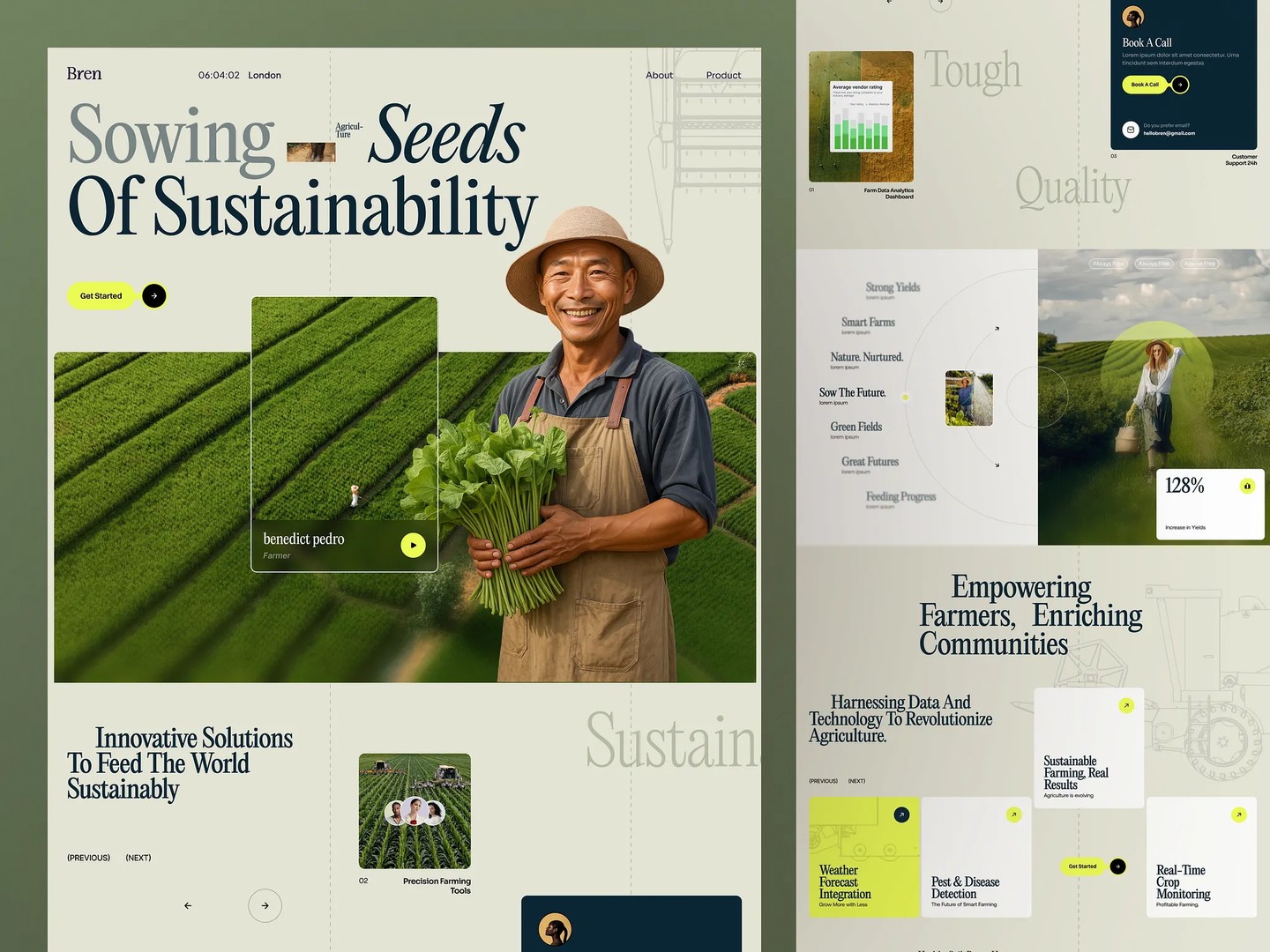
Summary: Agriculture businesses in 2026 need more than just traditional operations—they need a strong online presence to connect with clients, showcase products, and grow their brand. In this blog, we explore how modern website design services can help agricultural companies thrive in the digital age.
Jump To:
- Why Agriculture Businesses Need a Website
- Modern Website Design Trends for Agriculture
- Product & Service Showcase
- Mobile-Friendly Design
- SEO Integration for Agriculture Websites
- E-Commerce Capabilities
- User Experience & Navigation
- Local SEO for Farms and Agri-Businesses
- Tracking and Analytics
- Conclusion
Need a professional agriculture website? Explore our Custom Web Design and Premium Website Design services tailored for 2026.
Why Agriculture Businesses Need a Website
Modern agricultural businesses are no longer limited to farms or local markets. Clients, suppliers, and partners search online to find farms, equipment, products, and services. A professional website acts as your digital storefront, builds credibility, and allows your agricultural business to reach wider audiences.
For 2026, a website is essential not just for information, but for digital marketing, lead generation, and e-commerce integration. Toronto-based and Ontario-wide agricultural companies can benefit from a strong online presence to compete effectively.
Modern Website Design Trends for Agriculture
Modern agriculture websites use clean layouts, large imagery, video integration, interactive features, and clear calls to action. Highlighting fields, farms, machinery, and crops with high-quality visuals engages users immediately.
Minimalist design, responsive interfaces, and accessibility standards ensure your website works across all devices and audiences.
Product & Service Showcase
Agriculture businesses often offer products like fresh produce, seeds, fertilizers, or machinery. Websites can showcase these products using galleries, detailed descriptions, pricing, and downloadable resources.
Service offerings such as consulting, farm visits, or technical support can also be highlighted, making it easier for clients to understand and engage with your offerings.
Mobile-Friendly Design
Farmers, buyers, and clients often browse on mobile devices. A mobile-friendly website ensures all users can access information, place orders, or contact your business from smartphones and tablets.
Responsive design is crucial for 2026, as Google prioritizes mobile-first indexing, affecting rankings and visibility.
SEO Integration for Agriculture Websites
SEO is vital for agriculture websites to rank in search results. Using relevant keywords such as “Toronto farm equipment,” “organic produce Ontario,” or “agricultural consulting Toronto” ensures your website reaches the right audience.
Integrating SEO in website design, including meta tags, headings, content, and images, maximizes visibility and drives organic traffic.
E-Commerce Capabilities
Modern agriculture websites often require e-commerce functionality to sell products online. Platforms like WooCommerce or custom-built solutions allow farms and agri-businesses to manage orders, payments, and shipping efficiently.
Online stores expand your market beyond local customers and enable 24/7 sales for products and services.
User Experience & Navigation
Simple navigation, clear menus, and easy-to-find information improve user experience. Visitors should quickly find product categories, farm locations, contact forms, and other important details.
Good UX reduces bounce rates and helps convert visitors into customers or clients.
Local SEO for Farms and Agri-Businesses
Local SEO is critical for agricultural businesses in Toronto and surrounding areas. Optimizing Google Business Profiles, local keywords, and local directory listings ensures nearby customers find your farm or services easily.
Reviews, location-based pages, and service area information improve credibility and search visibility.
Tracking and Analytics
Analytics tools help agricultural businesses measure traffic, user behavior, and conversions. Tracking popular products, pages, and visitor sources allows you to make data-driven improvements to your website and marketing strategy.
Insights from analytics ensure your website continues to serve customers effectively and supports growth in 2026.
Conclusion
Website design for agriculture businesses in 2026 is about combining aesthetics, functionality, and SEO. A professional, mobile-friendly, and well-optimized website helps Toronto and Ontario farms attract customers, showcase products, and grow their business online.
To get started on a modern agriculture website, visit our Contact Page and speak with our team today.

